Tired of “cozy” games that actually stress you out with timers and bills? Here’s my honest experience with 7 games that are genuinely cozy and help you unplug and slow down.
Lately it feels like the “relaxing” label gets slapped on anything with pastel colors and a soft piano soundtrack. You download a game thinking you’re in for a chill afternoon, and twenty minutes later you’re running profitability calculations to pay off your farm’s mortgage, racing against the clock because nightfall is coming, or managing a supply chain more complicated than the job you’re trying to escape from.
If you also need to slow things down, let’s go through seven picks that have been an absolute lifeline for my brain over the past few months.
Image generated for illustrative purposes
What I look for in a truly cozy game
The market is flooded with life sims and management games that, despite their beautiful aesthetics, run on the exact same demanding rules as real life. If you have to keep an eye on an energy bar, worry about your crops wilting, or stress over customers getting mad because you took too long to serve them, actually disconnecting is pretty much impossible.
For me, a game that’s truly cozy is one that lets you relax. It’s a safe space where mistakes aren’t punished and where you can sit there staring at the scenery for ten minutes without feeling like you’re wasting time.
Sometimes the most restorative thing in the world is simply watching the rain fall, arranging stickers, or coloring in a drawing at your own pace.

Image by Wombat Brawler
1. Cast n Chill
We’re kicking things off with a gem that perfectly understands what active rest really means. In most games that include fishing, the minigame usually ends up being a reflex test where you’re mashing buttons at full speed so the catch doesn’t get away.
Cast n Chill flips that idea completely on its head and turns the act of fishing into a guided meditation by the water.
What an afternoon by the water feels like
From the very first moment, the game invites you to breathe slower. There’s no giant map packed with overwhelming icons, no characters nagging you with endless side quests.
It’s just you, your rod, a small boat or a wooden dock, and the constant, gentle sound of water lapping nearby.
The gameplay is as simple as it is pleasant. You cast your line, watch the bobber float on the ripples, and wait. While you wait, the environment does its thing. You see clouds drifting across the lake’s reflection, hear a bird singing somewhere in the distance, and notice how the light shifts as the day moves along.
When a fish bites, reeling it in isn’t a fight. There’s just enough engagement to make you feel like your hands are doing something, but the whole thing flows with this effortless smoothness.
Why it works so well for clearing your head
What I love most about Cast n Chill is that it validates doing nothing. You can leave the game open while you get up to grab a glass of water, or just sit there watching the vegetation sway in the breeze. There are two fishing modes, active and passive. The passive one lets your character fish automatically.
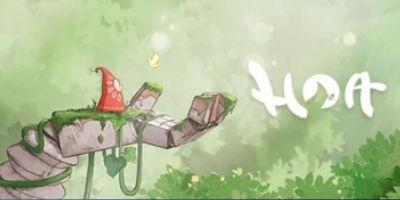
Image by Skrollcat Studio
2. Hoa
If you’ve ever felt that deep sense of calm watching a classic hand-drawn animated film, Hoa is the closest thing you’ll find in interactive form.
A hand-painted world where nothing wants to hurt you
In Hoa, you control a tiny creature returning to its home, a lush, vibrant forest where every leaf, every stone, and every ray of sunlight looks like it was painted with watercolors on thick textured paper.
In most platformers, every jump comes with the fear of falling into the void or smacking into an enemy that drains your health. That doesn’t exist in Hoa. Here, the giant insects, the forest creatures, and the plants aren’t obstacles. They’re friendly neighbors who help you move forward.
A beetle serves as a platform to reach a high branch, a ladybug gently boosts you upward, and the local creatures approach you with curiosity.
Moving through its levels feels like taking a walk through the countryside on a spring morning. The music, performed primarily with piano and strings, accompanies every step and adapts to what’s happening on screen.
It’s a story told without words about caring for nature, memory, and belonging. It lasts just a few hours, exactly the right length to feel like a good novella or a lazy Sunday afternoon movie.

Image by HiWarp
3. Naiad
Sticking with the water theme, because if there’s one thing that calms the mind, it’s letting yourself be carried by the current of a river. Naiad is a beautiful little indie gem created almost entirely by a single person, and you can feel the love and patience poured into every bend of the riverbed. You can find it in Loaded.
Being a river nymph with no rush and no rigid goals
In this game, you’re a small nymph traveling along a crystal-clear river, from its source high in the mountains all the way down to where it meets the sea.
The concept is as simple as it is hypnotic. Swim, dive between the rocks on the riverbed, sing to the flowers along the banks to make them bloom, and hang out with the animals that live near the water.
There’s no giant arrow telling you where to go and no timer telling you how long you’re taking to cross each stretch. You can swim fast riding the current, or stay behind in a quiet pool playing with a family of ducklings that follows you everywhere. In fact, guiding the ducklings or helping the frogs and fish is part of the natural charm of the journey.
The sound of water and the organic rhythm of exploration
What makes Naiad such a restorative experience is its sound and visual design. The colors are vivid but easy on the eyes, with water transparencies that let you see the pebbles on the bottom and the sun’s reflections filtering through the treetops. The sound of water splashing when you surface, or the muffled silence when you dive under, creates an incredibly immersive atmosphere.

Image by Spellgarden Games
4. Sticky Business
Switching gears completely, going from nature to your desktop, to talk about a game that proves running a small shop can be a deeply relaxing activity when you strip away all the pressures of real-world commerce.
Sticky Business is all about running your own online sticker shop, and it’s the closest thing to doing crafts on a rainy afternoon. Grab it at Loaded.
Designing and enjoying the creative process
Your in-game workday breaks down into very clear, unhurried steps. First, you hop into the editor to design your own stickers. You’ve got hundreds of beautifully illustrated elements at your disposal, from cute animals, coffee mugs, and plants to sparkly details and colorful backgrounds. You can combine them however you want, resize them, rotate them, and create themed collections.
There’s no panel of judges evaluating whether your design is commercially viable or whether the colors go well together. If you like a frog wearing a mushroom hat surrounded by stars, you make it, print it on your virtual sticker sheet, and put it up for sale.
The joy of packing each box with care
Once your designs are in the shop, orders start rolling in. But nobody’s in a hurry here. You can take all the time in the world to prepare each shipment.
You grab a cardboard box, choose the color of the tissue paper to line it with, carefully place the stickers the customer ordered, and if you feel like it, toss in a little extra like a candy or a thank-you card. Then you close the box, stick on the shipping label, and move on to the next one.
Through the orders, you get to know little stories from your repeat customers, who leave sweet notes telling you what they use your stickers for. One person sticks them in their therapy journal, another uses them to decorate her daughter’s notebooks, and someone else collects them because they brighten their day.

Image by Maciej Targoni
5. NABOKI
Some days you just don’t feel like exploring a huge world, following a story, or juggling a million things at once. You just want to sit down for a bit, focus on something simple, and let your brain rest from all the accumulated noise.
For those moments, NABOKI fits especially well among the most minimalist cozy games out there.
Created by Maciej Targoni and released in 2019, NABOKI is a puzzle game built on an idea that’s as simple as it is satisfying. Take structures made of small pieces apart until there’s nothing left.
Taking pieces apart until everything clicks
The first time you see one of its levels, what you’re looking at is a geometric composition made of blocks that appear to be connected to each other. Your task is figuring out how to separate them, removing pieces in the right order to disassemble the entire structure.
At first, the solutions are pretty intuitive. Some pieces have small arrows showing which direction they can slide, and a moment of observation is all it takes to understand what you need to do. But as you progress, the structures get more elaborate and new mechanisms start demanding a bit more attention.
There are pieces that block the exit of others, elements you have to move before you can continue, and structures you can rotate to discover new possibilities.
The game doesn’t constantly explain what you should do. You learn by experimenting, trying moves, and watching how each mechanism responds.
When you manage to free a piece that seemed trapped and realize it unlocks the rest of the structure, you get that quiet little rush of having found the solution on your own. You don’t need to solve everything right away. You can observe the puzzle, think it over, and move forward whenever you find the next step.
Why its minimalism helps you disconnect
One of NABOKI’s smartest design choices is stripping away practically anything that could distract you from the puzzles. There are no scores, no written tutorials, and no timers forcing you to solve each level at a certain speed.
On top of that simplicity, there’s an ambient, meditative soundtrack composed by Wojciech Wasiak that accompanies your moves without demanding too much attention. The combination of soft music, geometric shapes, and small repetitive actions creates an especially pleasant experience.
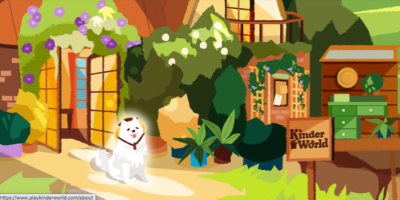
Image by Kinder World
6. Kinder World
Some projects are born with a very clear focus on emotional wellbeing, and Kinder World is the perfect example. It’s not just a video game. It’s a small community and a safe space specifically designed to take care of you while you take care of virtual plants.
Plants that grow at your pace and never die
In traditional gardening sims, the fear that your favorite plant will wilt because you couldn’t log in for two days is a constant source of low-grade stress.
Kinder World completely eliminates that anxiety. Here, plants never die. If you go a whole week without opening the app, your plant will still be there waiting patiently for you, ready to keep growing whenever you are.
The process is as simple as it is rewarding. You get a pot, plant a seed, and as real hours pass, the plant develops. To help it grow, you complete small daily activities that take just a few minutes, like mindful breathing exercises, naming your emotions in a personal journal, writing affirmations, or tracing repetitive drawing patterns.
A judgment-free space where you come first
What makes this game stand out above everything else is its absolute focus on self-compassion. The questions the game asks you at the start of each session aren’t trying to measure your productivity. They’re asking how you’re really doing. Are you feeling overwhelmed? Do you need to stop? What’s one small thing you can do for yourself today?
Every activity you complete turns into water or nutrients for your plant, which, when it blooms, rewards you with unique leaves in beautiful shapes that you can collect.
Heads up. In October 2025, the developers announced the end of active development for the game. They also clarified that it would remain available and that player data would be preserved.
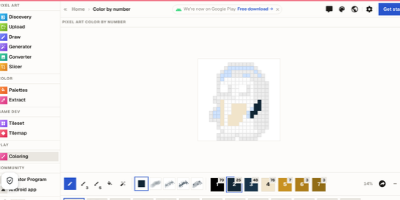
Image by simplepixelart
7. Pixel Art and Color by Number. More of a relaxation tool than a traditional game
To close out this list of picks that genuinely bring calm, I wanted to talk about something that often sits right on the border between relaxation app and traditional video game. Pixel art focused on color by number, like the kind you’ll find on dedicated platforms such as Color by Number.
Why pixel art feels so satisfying for your brain
At first glance, staring at a grid full of tiny numbers might seem tedious, but in practice it works exactly like an adult coloring book or a cross-stitch project. The big advantage of the digital format and pixel art is the precision and cleanliness. Each number corresponds to a shade of color, and your only job is to fill in the spaces.
This kind of activity triggers what we know as a flow state. By having to find a specific number on the screen and click to color it in, your brain automatically disconnects from circular thoughts and the worries of the day.
It’s repetitive yet creative, absorbing enough to distract you from your stress but simple enough to never cause any frustration.
Watching an image come to life pixel by pixel
The satisfaction of watching a gray, abstract grid gradually transform into a cozy landscape, a cute animal, or a warm everyday scene is mesmerizing in the best possible way. There’s no rush to finish the picture. You can click three times, leave the screen open while you take a sip of tea, and come back whenever you feel like it.
It’s a fantastic alternative for those moments when your brain is too tired to even follow a narrative or make decisions in an exploration game, but your hands need to be doing something.
A pixel coloring session paired with ambient music is one of the best recipes I know for winding down before bed.
Quick summary. Cozy games for unwinding
| Game | Type of experience | Available platforms |
|---|---|---|
| Cast n Chill | Relaxing fishing with active and passive modes | PC (Windows), macOS, Nintendo Switch, and Switch 2 |
| Hoa | Platforming, exploration, and nature | PC (Windows), macOS, PS4, PS5, Xbox One, Xbox Series X/S, and Nintendo Switch |
| Naiad | River exploration and nature | PC (Windows), macOS, PS4, PS5, Xbox One, Xbox Series X/S, and Nintendo Switch |
| Sticky Business | Sticker design and shop management | PC (Windows), macOS, PS5, Xbox Series X/S, and Nintendo Switch |
| NABOKI | Minimalist geometric puzzles | PC (Windows, macOS, and Linux), Android, iPhone, and iPad |
| Kinder World | Self-care and virtual gardening | Android and iOS |
| Pixel Art and Color by Number | Digital color by number | Web browser, with Chrome extension |
Frequently asked questions about these cozy games
Do these games actually help with anxiety, or is it just a trend?
They’re not a magic wand, and they don’t replace professional therapy when there are deeper issues at play. But I can tell you they work on a physiological level. By removing competitive elements, timers, and penalties, you’re sending a clear signal to your nervous system that you’re in a safe environment. They’re incredibly helpful for slowing things down and shifting your focus when your mind is spiraling too much.
Do I need a powerful computer or a next-gen console?
That’s another huge perk of these kinds of indie and minimalist games. The vast majority run perfectly fine on basic computers, modest laptops, or even mobile devices and web browsers.
What if I get bored because there’s not enough “action”?
That’s a totally normal reaction if you’re used to games where there always has to be an immediate goal or a level to beat. If that happens, I’d suggest not thinking of them as a challenge to “conquer,” but as an ambient space. Put them on in the background while you listen to a podcast, or use them for just ten minutes when you notice the screen is overstimulating you. The secret is shifting your mindset.

Truly cozy games infographic
At the end of the day, the key to all of this is remembering that your free time is completely yours. You don’t owe anyone anything, and you don’t have to chase whatever’s trending if those games just leave you more exhausted than you were before.
Whether you choose to drift down a river in Naiad, pack stickers with care in Sticky Business, tend to a patient little planter in Kinder World, or fill in a pixel grid without watching the clock, what matters is finding that digital corner where you can actually breathe.
I hope this list inspires you to carve out some quieter moments for yourself.
Tell me in the comments. What’s that one game you always come back to when you need to shut the world out for a while? I’d love to hear about it.